+11
points
Higher appointment attendance
Approximate improvement in attendance across reminder studies reviewed by Cochrane.
Evidence basis: Cochrane reminder review
One trusted health and wellness view for patients, families and care teams.
Patients want care to feel continuous. Doctors need reliable context without spending the consultation rebuilding it. Both are affected when information and next actions remain scattered.
People carry documents and explain the same history again because the right context does not travel with them.
The consultation begins before recent results, medicines and prior care are assembled into one useful picture.
Doctors and patients lose valuable minutes searching, clarifying and filling gaps instead of discussing the care decision.
Patients leave with several actions while care teams have limited visibility into what was completed or misunderstood.
Sleep, activity, nutrition and vital trends rarely reach the next appointment as clear and relevant context.
Booking, insurance, pharmacy and follow up operate as separate tasks for patients and separate queues for providers.
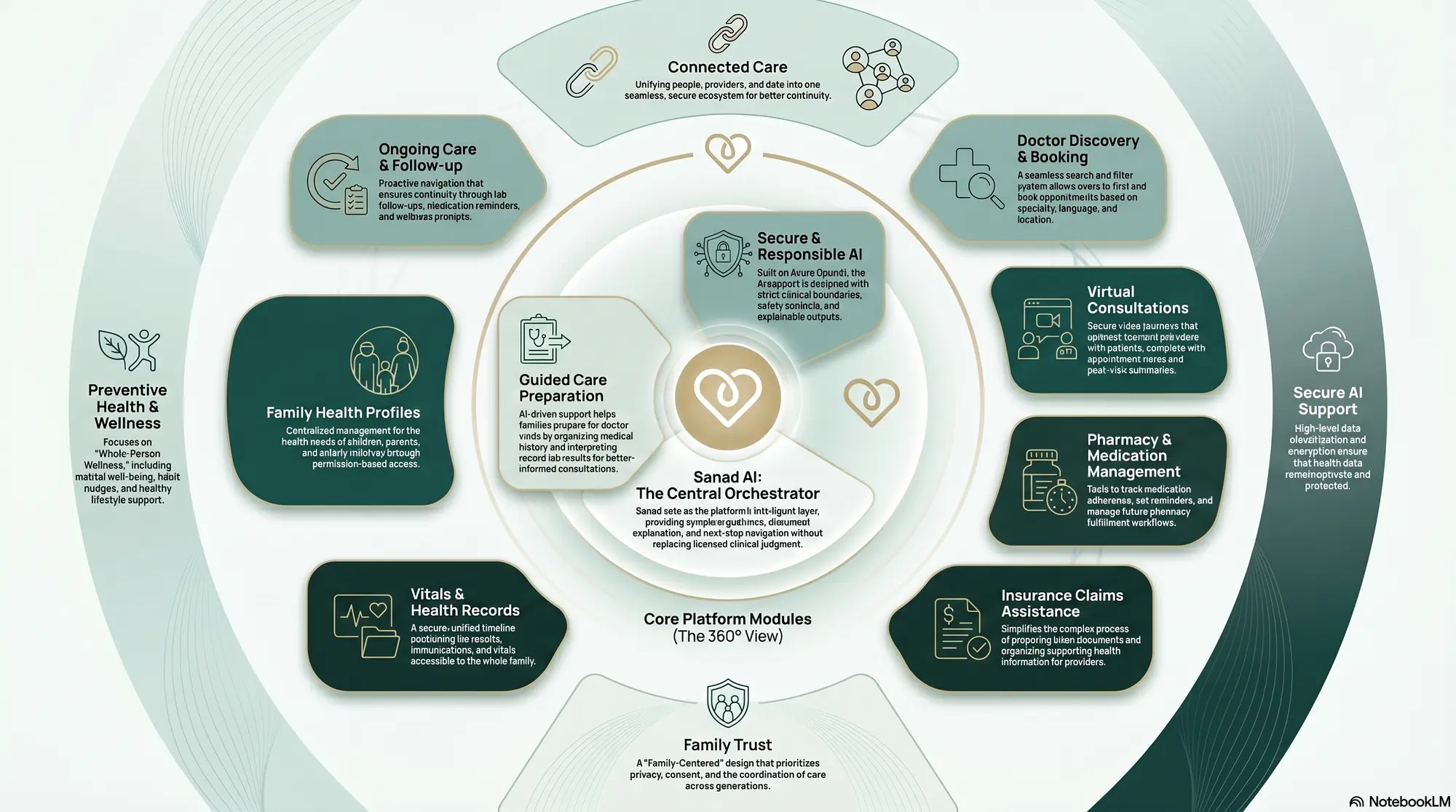
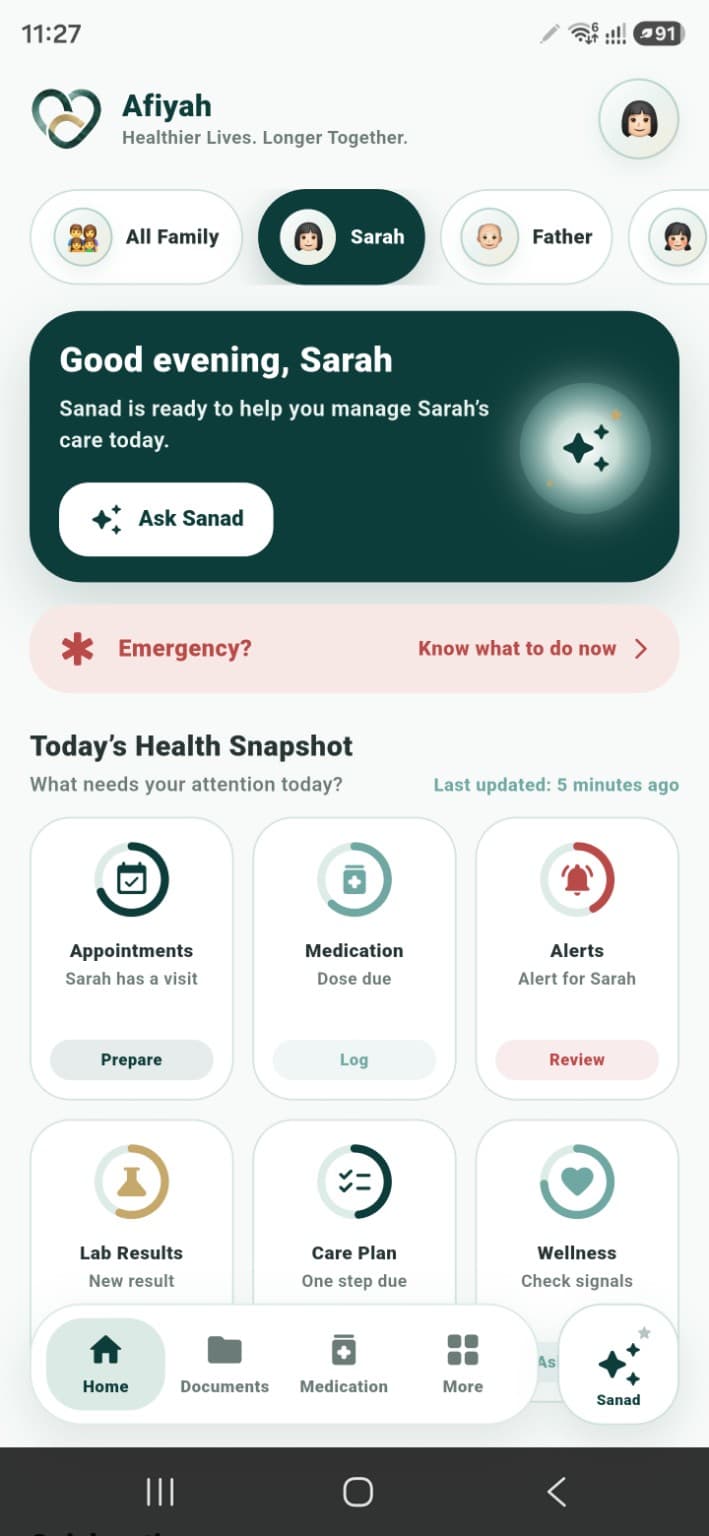
Family profiles, doctors, consultations, medicines, insurance, records and follow up come together as one coordinated experience. Sanad keeps the next action clear while consent and clinical responsibility stay visible.
Profiles, records, medicines and wellness remain organized around each person.
Discovery, booking and consultations become part of the same patient journey.
Preparation, explanations and next actions stay clear without replacing the doctor.
Insurance, pharmacy and follow up keep moving after the appointment ends.
Afiyah connects the moments before, during and after care. Patients keep one clear experience while doctors receive the consented context needed for a better informed conversation.
The patient prepares once with records, medicines, symptoms and questions ready.
The doctor receives relevant consented context before the conversation begins.
The visit focuses on what has changed and what needs to happen next.
The doctor can review the timeline, explain the decision and agree a clear plan.
Results, medicines, insurance steps and follow up remain visible in one place.
The care team can see whether important next actions are progressing or need attention.
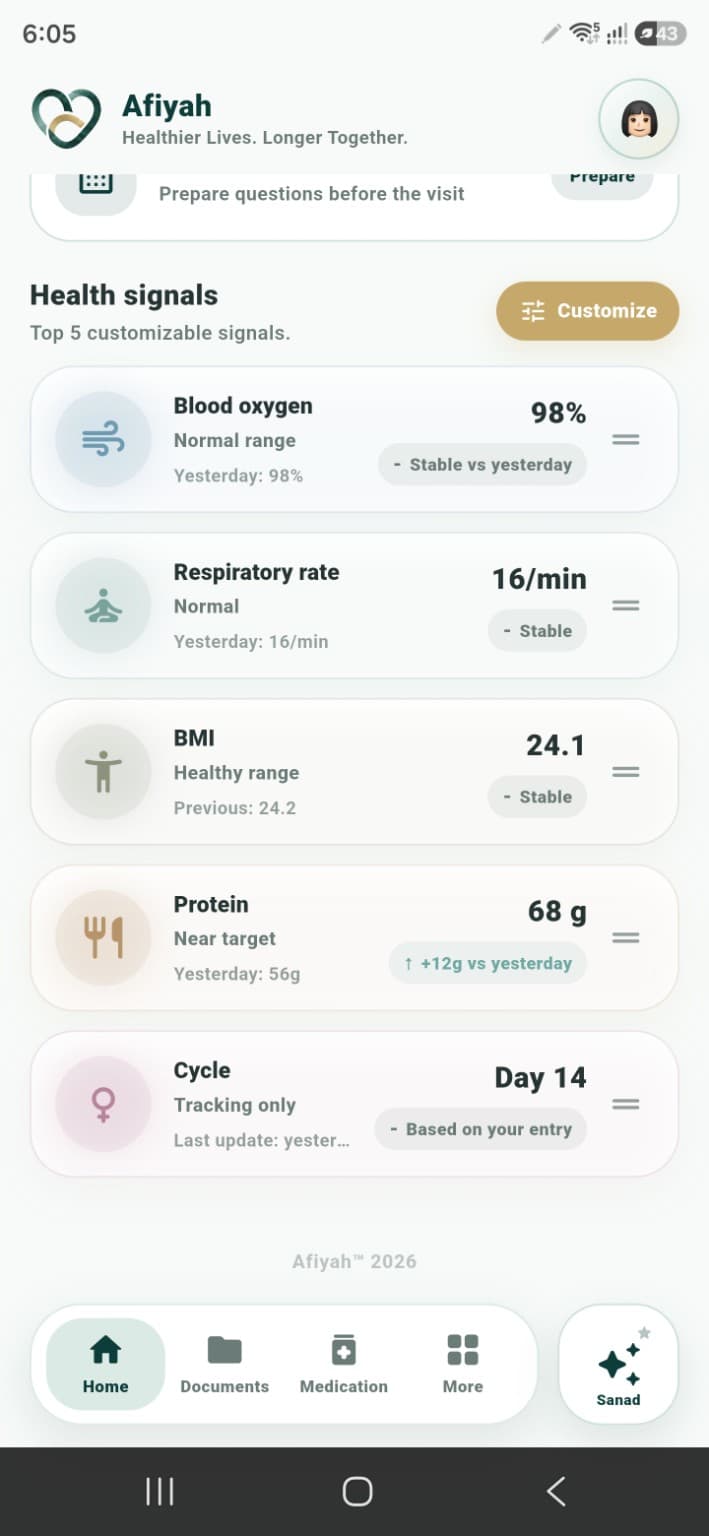
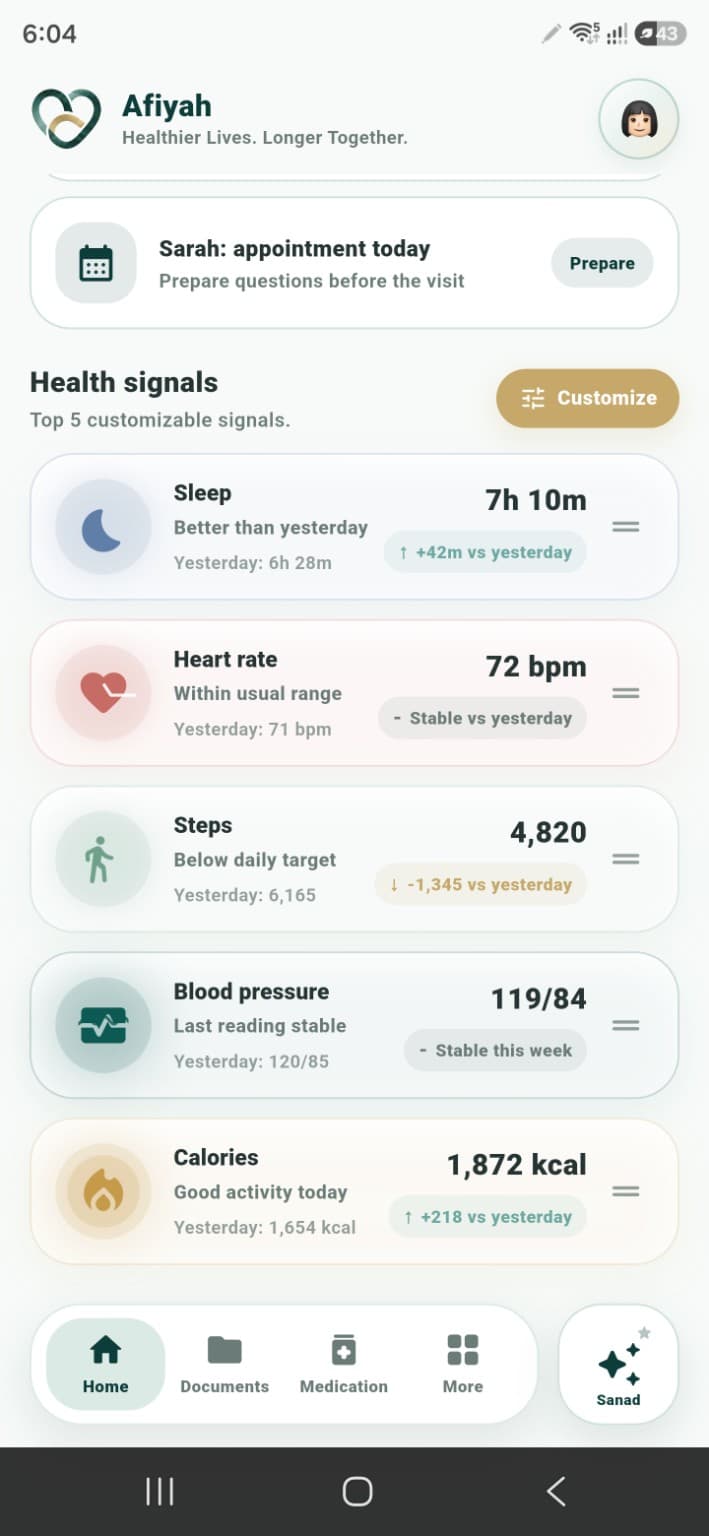
Daily wellness signals become understandable prompts instead of disconnected numbers.
Meaningful changes can support the next conversation without creating constant noise.
The patient can see what matters today. Doctors can receive useful context at the next care moment. The experience stays simple even when the information behind it is complex.
Sanad helps the patient understand what happened, prepare what comes next and stay connected to the care team. It can coordinate approved actions, but it does not replace medical judgment.
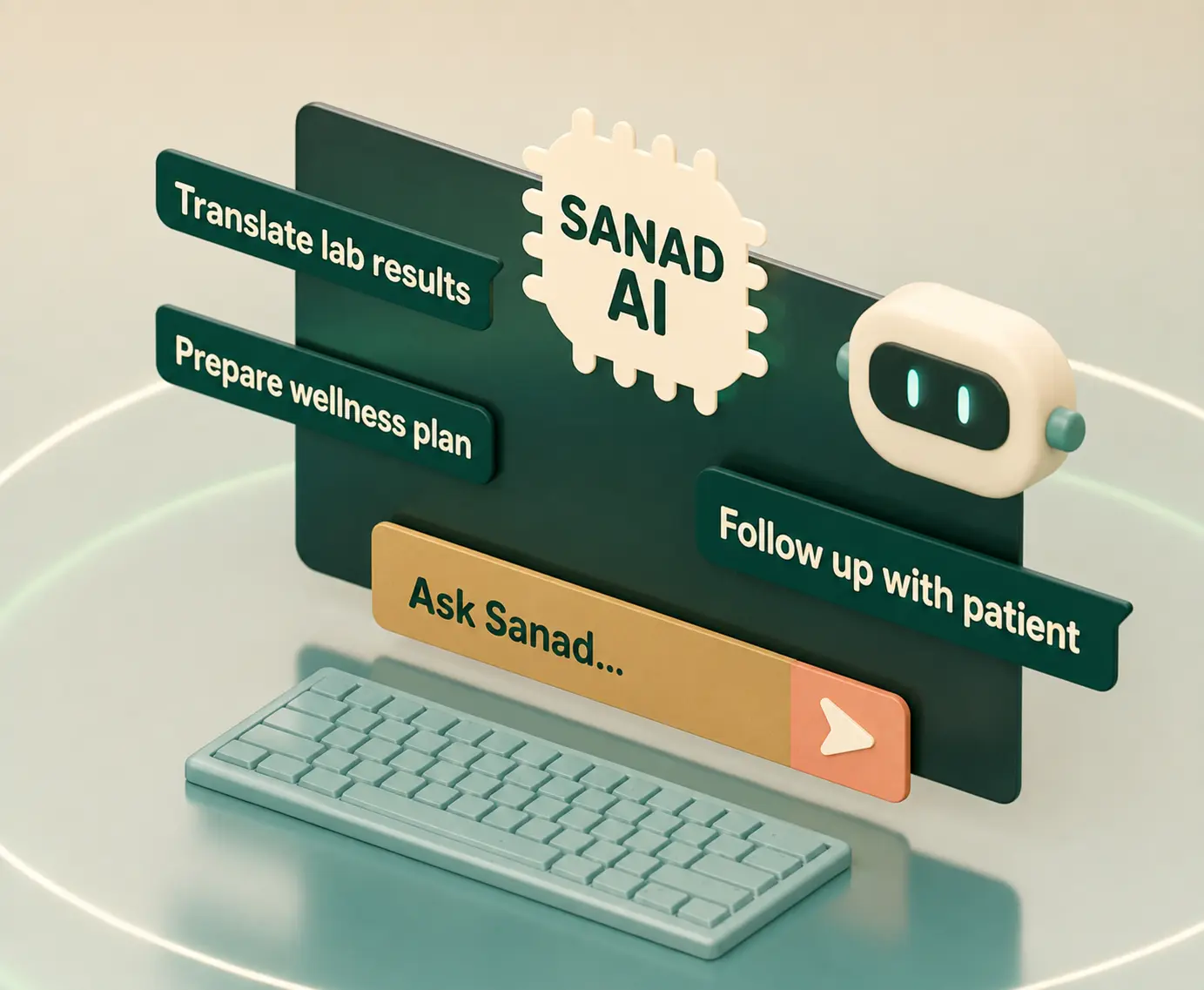
Sanad explains the result in plain language, preserves the source and prepares useful questions for the doctor.
Sanad brings approved guidance, medicines, appointments and realistic daily actions into one plan.
Sanad checks progress, reminds the patient and routes uncertainty or meaningful changes to the right professional.
Trust is not a list of technical standards. It is knowing whose information you are viewing, where it came from, what may be missing and when a qualified professional must lead.
Patient confidence, clinician accountability, safe handoffs and the integrity of every next action.
The original result, report or care record remains visible beside any explanation or summary.
Source, timing, units and important gaps remain visible so context can be checked before it shapes a decision.
Sanad supports understanding and coordination, while diagnosis, treatment and medication decisions remain human led.
Patients, family supporters and care teams see only the information and actions appropriate to their role.
FHIR R5, SNOMED CT, LOINC, DICOM, ICD 11 help systems exchange and interpret information consistently. They support quality and traceability, but never replace clinical review.
These external studies show what connected health programs can influence. They are not Afiyah results or guarantees. Each hospital, clinic and market must measure its own baseline, adoption and realized value.
Approximate improvement in attendance across reminder studies reviewed by Cochrane.
Reported in a meta analysis of electronic health record based interventions across 116 trials.
Reported in the same meta analysis, with variation across intervention types and settings.
Association observed when health information exchange was used in one emergency care study.
Association reported in a meta analysis of mobile health applications supporting medicine adherence.
Reduction observed in one home monitoring study and not a universal result across all programs.
Afiyah is a STRIV product created to connect patient experience, provider context, wellness and governed agentic care around the same person.